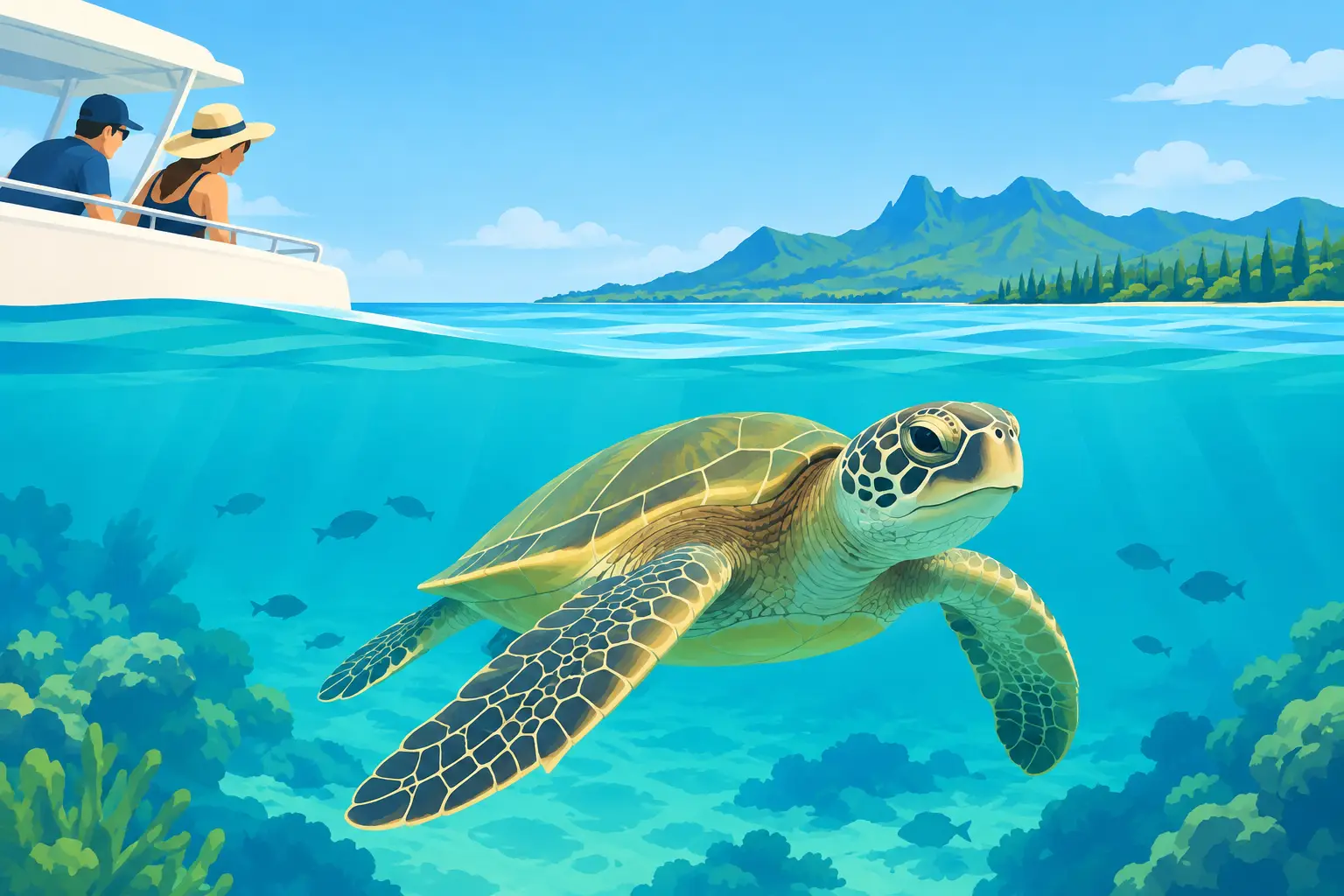
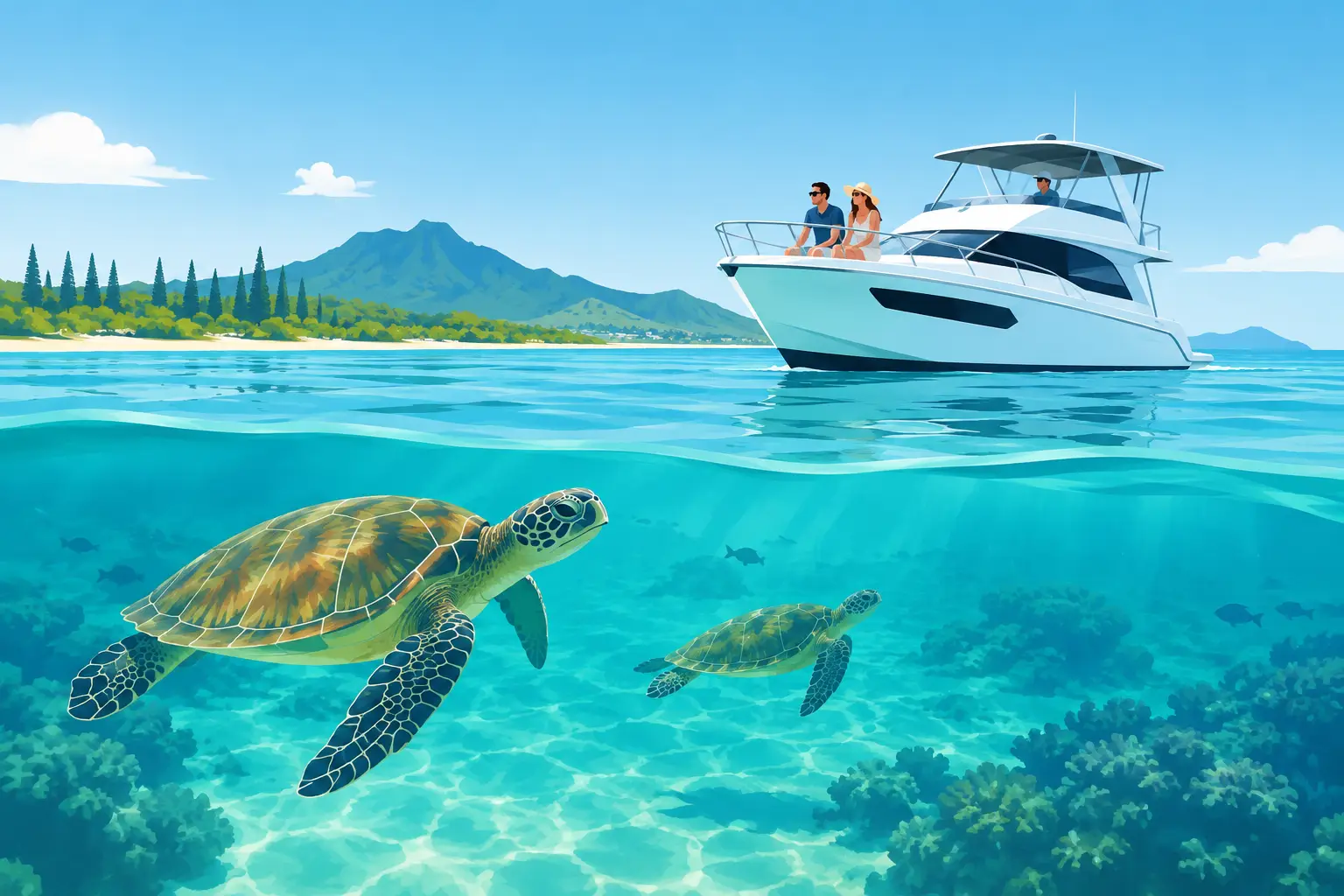
Are turtle encounters guaranteed on a Noumea tour? Learn what shapes sightings, how guides plan responsibly, and how to prepare for a great day at sea.
Can Children Snorkel Safely? Family Tips
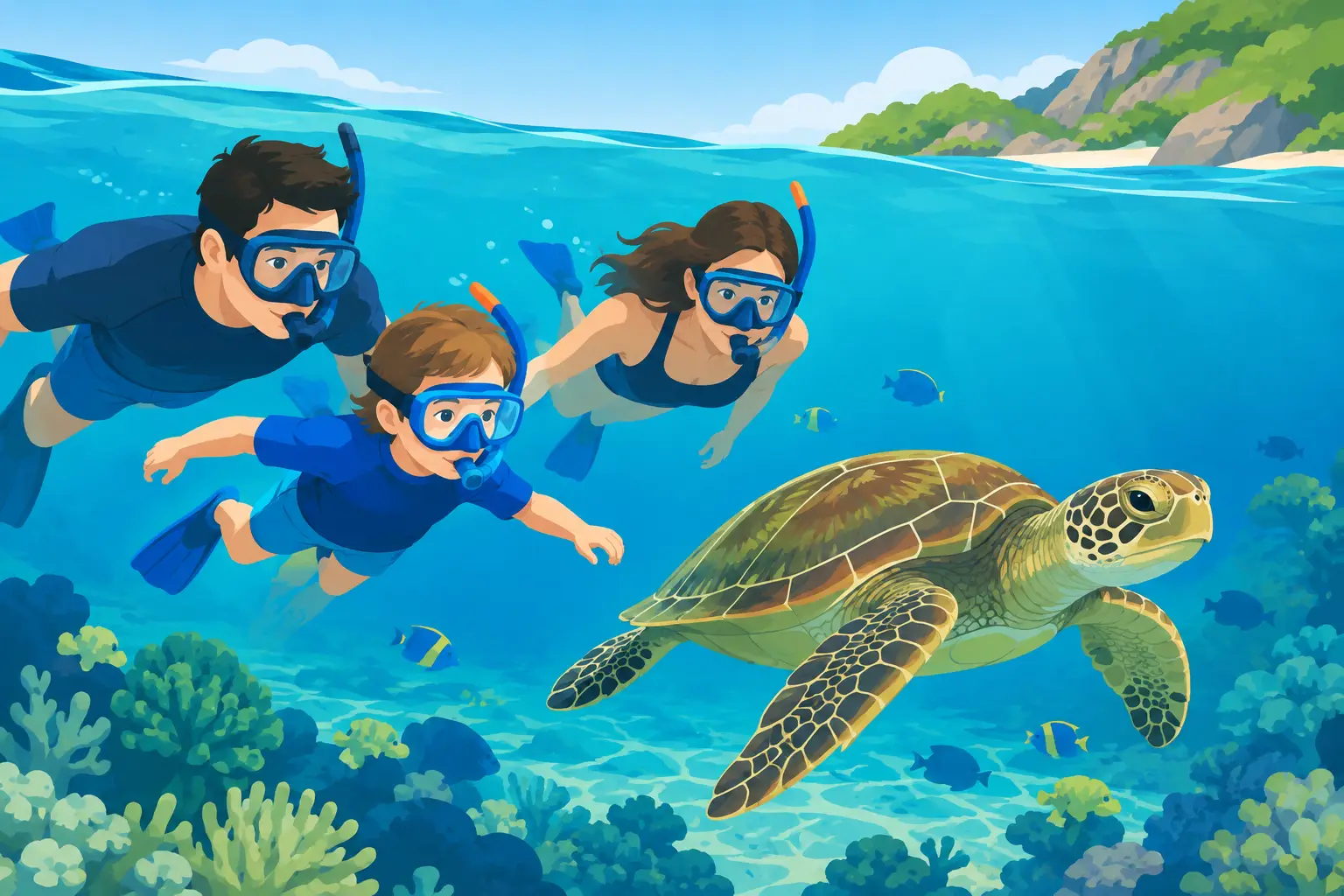
A child spots a bright blue fish beneath clear lagoon water, points excitedly, then lifts their face to check that you are still nearby. That small check-in tells you a lot about whether the experience is going well. Can children snorkel safely? Yes, many can enjoy snorkeling safely when the conditions, equipment, supervision, and expectations match their age and confidence.
For families visiting Noumea on a cruise stop or a short island holiday, snorkeling can be one of the most memorable parts of the day. The lagoon offers remarkable color, calm beach areas, and marine life worth slowing down for. But a successful family snorkel is not about getting far from shore or seeing the biggest turtle. It is about helping each child feel secure enough to look down, breathe calmly, and enjoy the water at their own pace.
Can children snorkel safely in a lagoon?
Children can snorkel safely in sheltered, shallow water with close adult supervision. The best setting is usually a protected beach or lagoon area with gentle entry, clear visibility, little to no current, and room to stand nearby. Open-water snorkeling, boat jumps, strong surf, and deep reef drop-offs are not the place for a child’s first attempt.
Age matters less than readiness. Some confident 5- or 6-year-olds may happily use a mask and snorkel in very shallow water, while an older child may need more time to become comfortable putting their face in. A child should be able to follow simple instructions, stay close to an adult, and tell you if they are cold, tired, scared, or uncomfortable.
Swimming ability is also only one part of the picture. A child who swims well in a pool can still feel uneasy with waves, salt water, a mask, or fish moving below them. Treat snorkeling as a new skill, not simply an extension of swimming.
Start with the water conditions, not the wildlife
A sea turtle encounter is exciting, but conditions decide whether it is a good day for children to snorkel. Before entering, look at the water from shore. Is the surface calm? Can you clearly see the sandy bottom? Is there an easy place to get in and out? Are other swimmers drifting in one direction?
If the water is choppy, murky, crowded, or moving faster than expected, choose a beach swim, a glassy shallows session, or another family activity instead. Changing the plan is good judgment, not a disappointment. Marine conditions can shift quickly with wind, tide, and weather.
For a first snorkel, stay where your child can stand comfortably or where you can stand beside them. A short 10-minute session can be far more enjoyable than asking them to push through a long swim. Once they are relaxed and asking to go back in, you can gradually extend the experience.
The right gear makes a major difference
Poorly fitted equipment can turn a beautiful lagoon into a frustrating experience. Test everything before heading away from shore, preferably in ankle- or waist-deep water.
A mask should seal gently around the child’s face without painful tightening. Have them hold it against their face and breathe in lightly through their nose. If it stays in place for a moment without the strap, it is likely a reasonable fit. Hair caught under the silicone edge is a common cause of leaks.
Choose a child-size snorkel with a comfortable mouthpiece. Let beginners practice breathing through it while standing in shallow water first. They should know that lifting their head above the surface is always okay. There is no prize for keeping the snorkel in all the time.
A properly fitted flotation device adds confidence and helps conserve energy. Depending on local rules and the child’s ability, this may be a snorkeling vest, approved life jacket, or buoyancy aid. Inflatable toys are not safety equipment. Fins can be fun for experienced young swimmers, but they are optional and can make walking awkward or tiring for beginners.
Bring reef-safe sun protection, a rash guard, drinking water, and a light towel or cover-up. Children often get cold before adults notice, especially after a long time floating quietly. Sun, wind, excitement, and salt water can all drain energy faster than expected.
Set simple family rules before you enter
The clearest safety rules are short enough for a child to remember. Explain them before the mask goes on, when everyone is dry, warm, and listening.
A good family plan includes these non-negotiables:
- Stay within arm’s reach of the supervising adult.
- Stop and signal if water enters the mask, snorkel, or mouth.
- Never touch coral, turtles, fish, or any other marine animal.
- Return to shore when anyone feels cold, tired, or worried.
Agree on one easy signal, such as a raised hand or an “okay” sign, and use it often. Ask children to look up every minute or two rather than becoming fully absorbed in what is below. This keeps them oriented and lets you check their face and body language.
One capable adult should actively supervise each young or inexperienced child. Watching from a towel, taking photos, or chatting with another adult is not the same as water supervision. If several children want to snorkel, take turns or choose a guided family experience with staff who know the site and can help coordinate the group.
Teach the first skills in shallow water
Before trying to spot fish, help your child master a few calm basics. Start by floating with their face in the water for just a few seconds. Then practice breathing through the snorkel while holding an adult’s hand or a floating support. Let them lift their head whenever they want.
Next, show them how to clear a little water from the snorkel by raising their head and removing it, rather than panicking or trying to force a complicated technique. With younger children, keeping it simple is safest. If the mask fogs or leaks, return to standing depth, fix it, and begin again.
Encourage slow movements. Fast kicking can splash water into the snorkel, stir up sand, and tire small legs quickly. A gentle float and quiet observation are enough. Coral reefs and lagoon life reward patience.
Respect turtles, coral, and personal limits
Seeing a turtle in the water can feel like an unforgettable moment, especially for a child. It is also the moment when adults need to keep the group calm. Watch from a respectful distance, do not chase or surround the animal, and never attempt to touch it. Turtles need clear space to surface, feed, and move naturally.
The same care applies to coral. Coral may look like rock, but it is living and can be damaged by standing, grabbing, or kicking it. Keep children over sandy areas where possible and explain that they are guests in the reef’s home.
Children do not need to prove bravery. If they prefer to wear goggles near shore, float with a mask but no snorkel, or watch marine life from a boat or beach, that is still a wonderful way to experience the lagoon. Comfort today often becomes confidence on the next outing.
When a guided outing is the easier choice
Families with limited time in port often appreciate a guided excursion because the practical details are handled for them. A good operator can point out suitable conditions, recommend the best entry area, provide correctly sized gear, and explain local wildlife etiquette in clear language.
This is particularly helpful for first-time snorkelers, families traveling with mixed ages, or visitors unfamiliar with tides and lagoon conditions. At Noumea Turtle Island Tours, family-friendly outings are designed to make island discovery feel straightforward, with local guidance and time to enjoy the beach as well as the water.
Still, ask questions before booking any activity. Find out whether the site is appropriate for children, what flotation support is available, how long the snorkeling portion lasts, and whether a child can stay aboard or on the beach with an adult if they decide not to enter the water. The best excursion leaves room for flexibility.
Know when to call it a day
End the snorkel early if your child is shivering, unusually quiet, swallowing water repeatedly, struggling to keep the mask on, or becoming distressed. Rest, warmth, and reassurance matter more than completing a planned route. Never pressure a child to re-enter after a scare.
Afterward, offer water, a snack, shade, and a chance to talk about what they saw. Ask what felt fun and what felt hard. Their answer will help shape the next family snorkeling session far better than any age chart.
The goal is not to turn every child into a confident snorkeler in one afternoon. Give them calm water, patient support, and space to be curious, and the lagoon can become a place they remember with pride long after the vacation ends.

Related Posts